Beyond the Hype | Why Capital is Funding Antifragile AI Projects, Not Just Startups
I didn’t fly from Sydney to Miami looking for headlines; I went looking for a signal. What I found wasn’t opportunistic enthusiasm it was structural conviction.
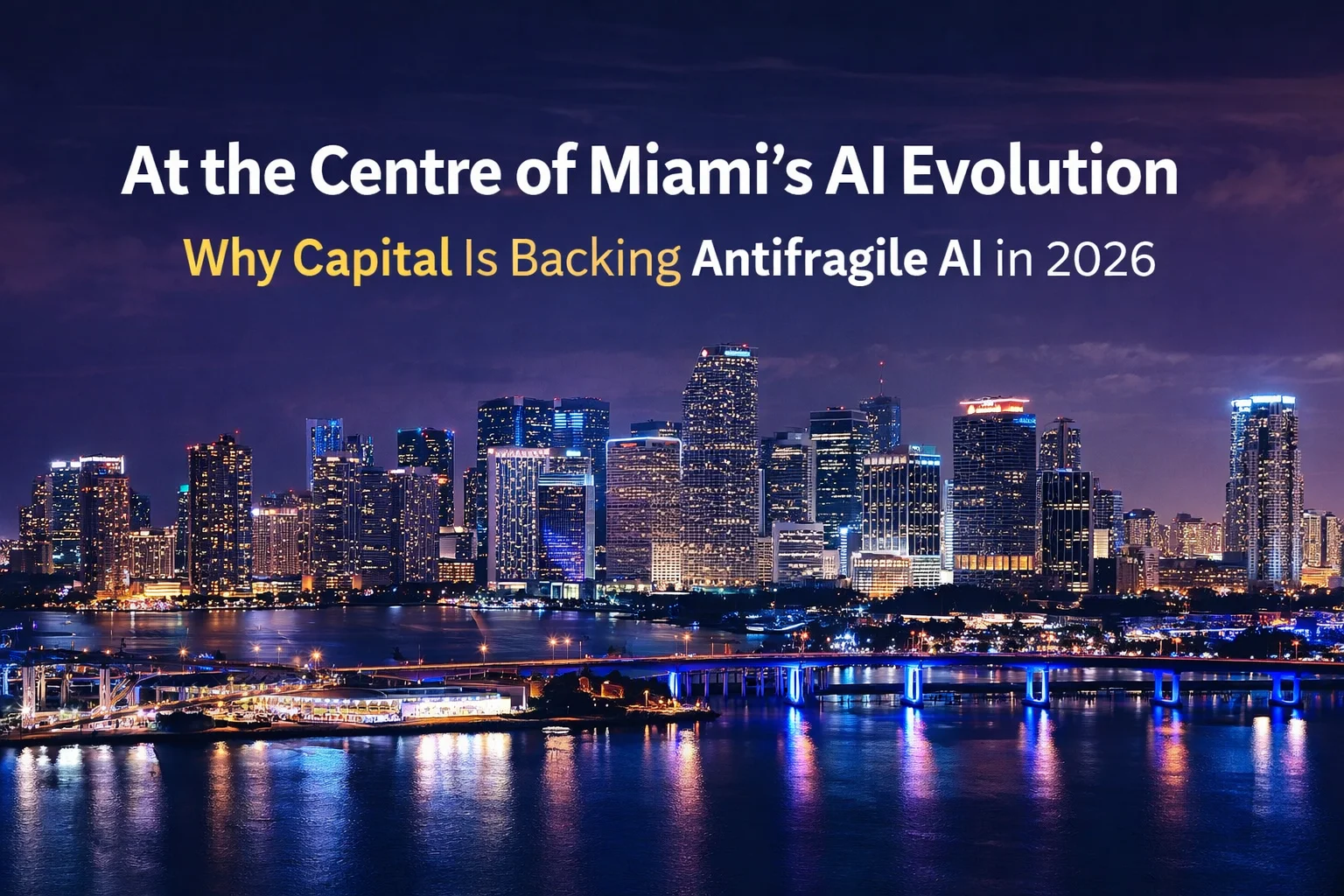
Behind the waterfront venues and polished tech summits, something fundamental is happening in Miami’s ecosystem: capital is quietly but aggressively consolidating around AI with long-term intent.
But there is a sharp pivot happening in 2026. The initial “AI bubble” is deflating, and investors are operating with extreme caution. The era of raising millions on a pitch deck and a flashy user interface is over.
The Death of the “Spray and Pray” Startup
Right now, venture capitalists are actively avoiding fragility. Over the past 18 months, the market was flooded with AI startups that were, in reality, just thin wrappers around OpenAI or Anthropic APIs.
Data shows that a massive percentage of these AI projects fail simply because they lack a clear target market or a long-term roadmap. They are essentially solutions in search of a problem. Founders build impressive models first and figure out monetisation later. But if a single foundational model update or a slight drop in API pricing from a hyperscaler can render your entire business model obsolete overnight, your company is incredibly fragile. Investors are realising that the risk of capital going to zero is exponentially higher when a startup relies on rented intelligence rather than owning its infrastructure.
The Antifragile Business Model
To understand where serious capital is flowing, you have to understand the difference between fragile, resilient, and antifragile systems.
- Fragile systems break under stress. (e.g., A “wrapper” startup that dies when ChatGPT releases a new native feature, or a traditional SEO strategy that collapses when Google rolls out an AI Overview).
- Resilient systems endure stress and eventually bounce back to their baseline.
- Antifragile systems actively gain from disorder. They use volatility, algorithmic chaos, and market shifts as fuel to grow stronger.
This is exactly what we have been engineering at Hyperdot. When you treat digital visibility as an engineering problem rather than a marketing tactic, you build an antifragile moat around your business.
By injecting AI-readable protocol into a client’s back end, we aren’t just trying to survive the shift to Generative Engine Optimisation (GEO) and Answer Engine Optimisation (AEO). We are building an infrastructure that gets stronger as the AI landscape becomes more chaotic. Because our code structures data at the entity level, every time an AI model scrapes the web or updates its parameters, our engineered “Source of Truth” becomes more deeply entrenched in its foundational Knowledge Graph.
The Conversations in Miami: Moats and Capability
This focus on antifragile engineering dominated my private conversations in Miami.
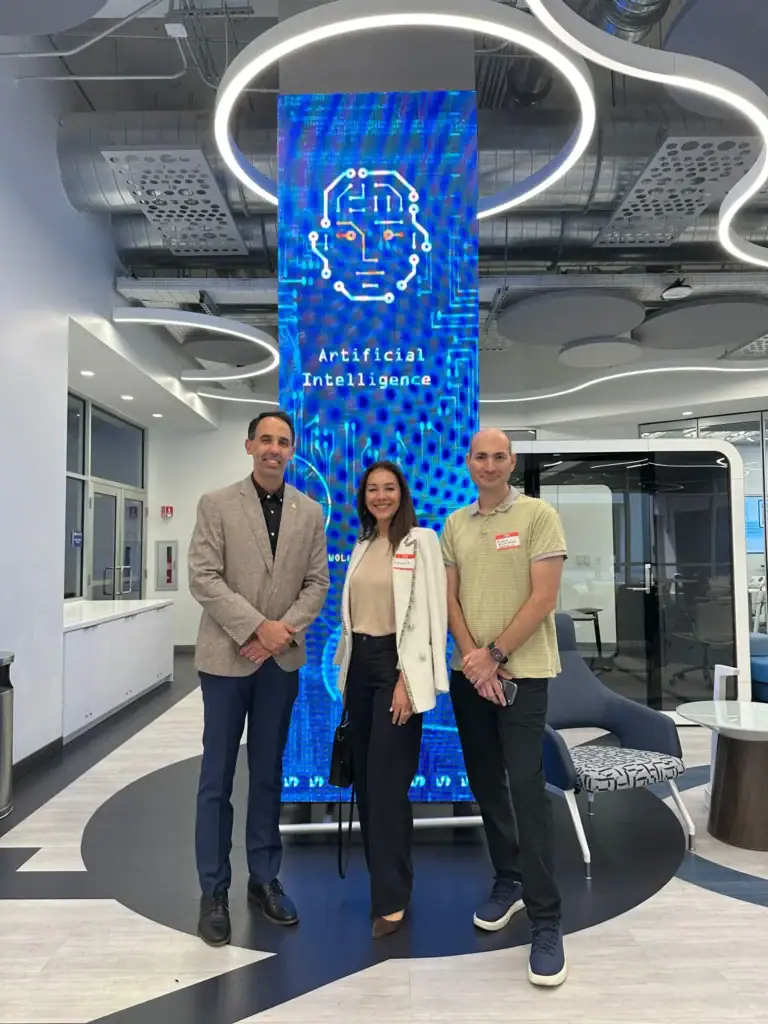
When I spoke with Eugene Malobrodsky, Managing Partner at One Way Ventures, the discussion naturally bypassed the superficial. Serious capital right now is evaluating whether a company is building a proprietary, defensible moat. Eugene’s perspective reinforced that the most lucrative investments in the AI era won’t go to the companies with the loudest marketing, but to the founders who possess the resilience to build foundational, globally scalable systems that AI cannot easily replicate.
But capital alone doesn’t sustain an ecosystem; it requires a pipeline of operators who understand how to deploy it. I also spent time with Pedro A Santos Acosta DBA, Executive Director of Emerging Technologies at Miami Dade College. They aren’t just teaching students how to prompt AI; they are teaching applied innovation. They are actively forging the next generation of operators who understand how to embed intelligence directly into business models to solve complex, real-world problems.
The Moment the Market Realises It’s Late
This focus on antifragile engineering is exactly what the broader market is currently missing in terms of digital visibility and business growth.
Right now, companies are still throwing budget at traditional SEO, fighting for clicks on search pages that are rapidly becoming obsolete. They are playing a fragile game. Businesses will only recognise the necessity of structural engineering when they start bleeding customers—not to their traditional competitors, but to AI interfaces like ChatGPT, Gemini, and Claude.
When consumer discovery shifts from clicking search links to receiving instant generative answers, visibility is no longer guaranteed by an ad budget. It must be engineered at the code level.
While Sydney remains an incredible hub for regulatory trust and technical precision, my time in Florida made one thing clear:
Miami is no longer just emerging. It is accelerating. And if you are a founder or executive building in this era, the defining question isn’t whether you are using AI. It’s whether your infrastructure is antifragile enough to survive it.
The future won’t reward experimentation. It will only reward integration.
—
Adriana Kligman
Hyperdot