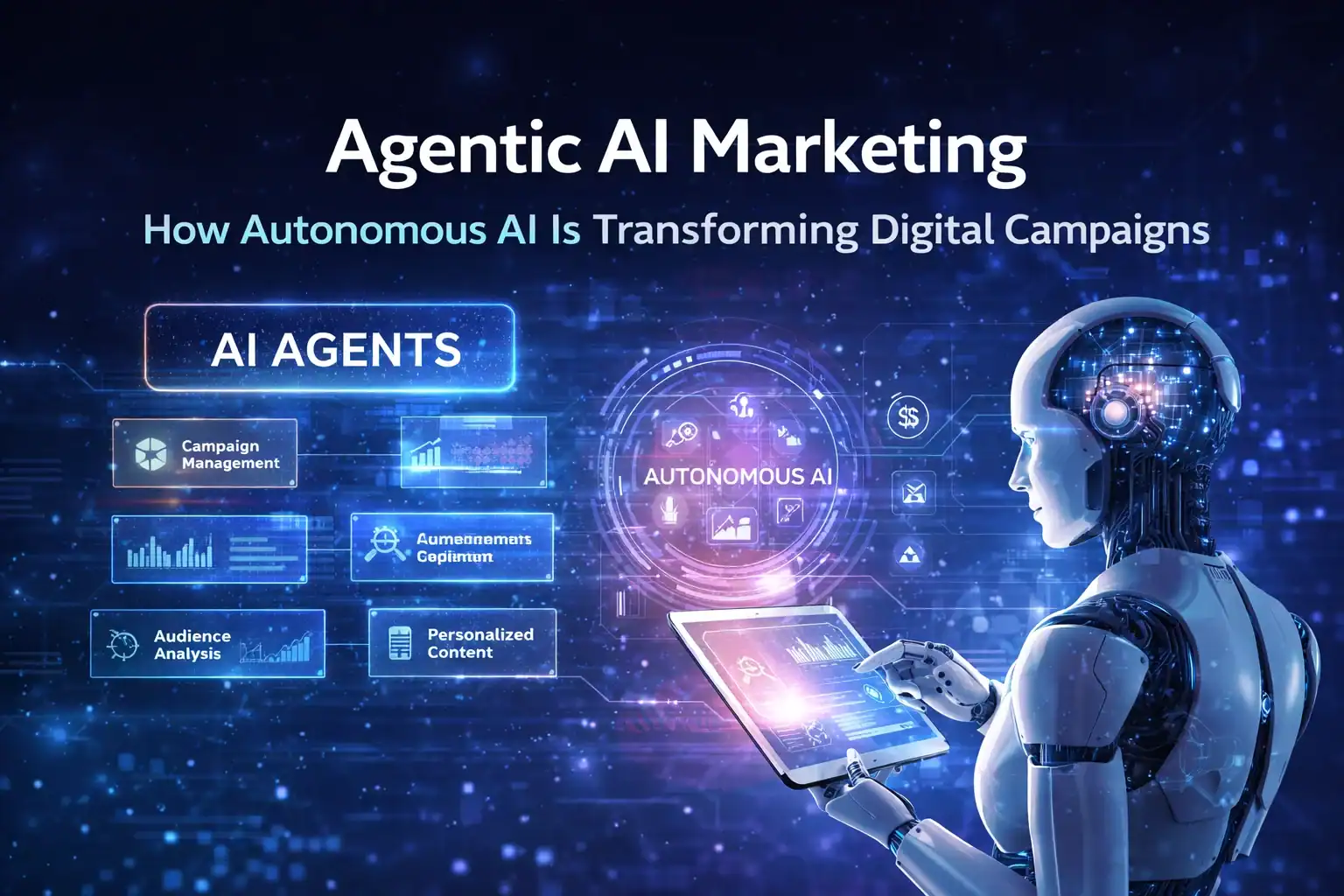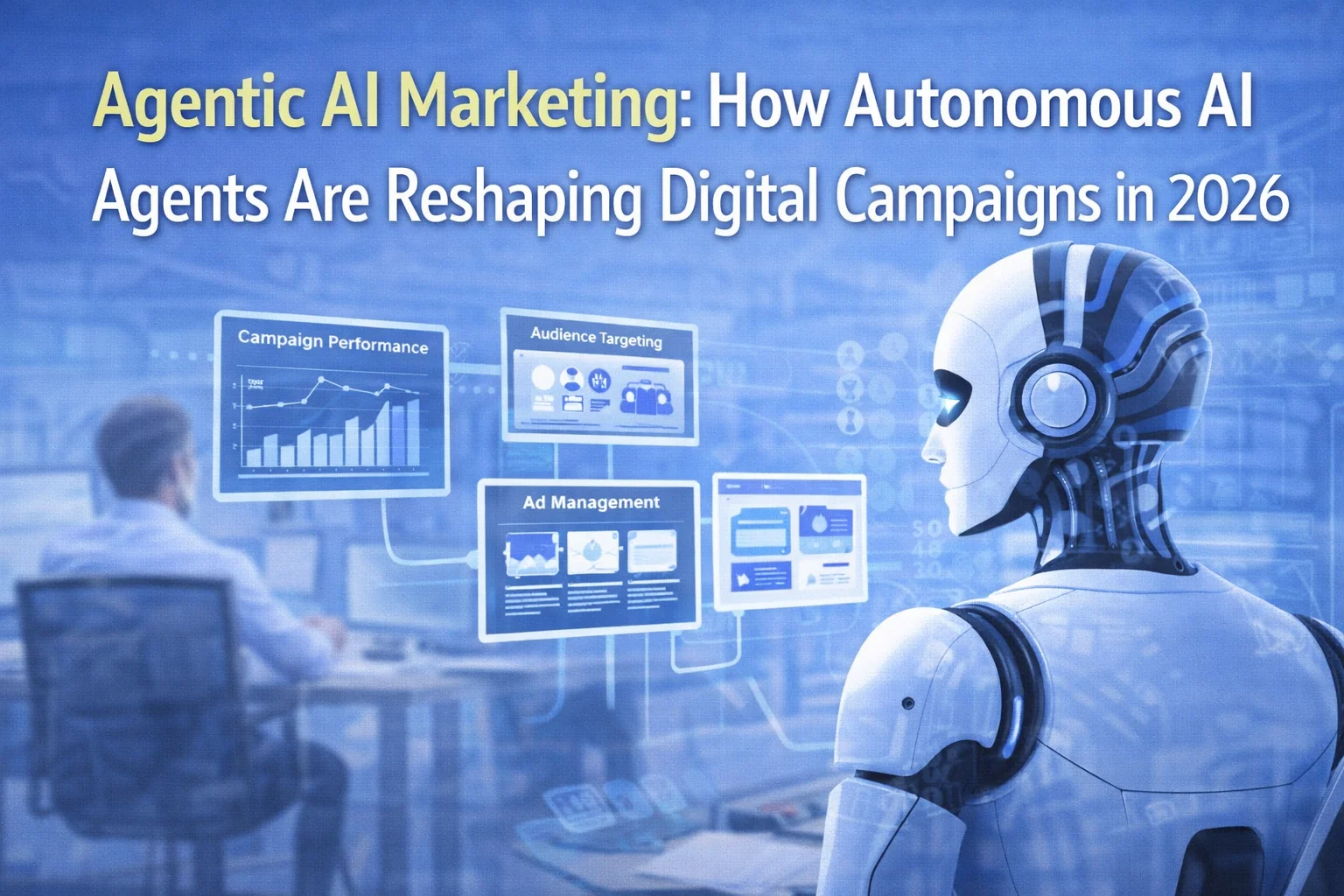
Artificial intelligence in marketing has moved beyond assistance. In 2026, we are entering the era of agentic AI marketing where autonomous AI agents don’t just support teams, but actively plan, execute and optimise campaigns with minimal human input.
This shift is redefining how digital marketing teams operate, how decisions are made, and what “automation” truly means.
What Is Agentic AI in Marketing?
Agentic AI refers to autonomous AI systems capable of:
- Setting goals
- Making decisions
- Executing actions
- Learning from outcomes
Unlike traditional AI tools that require prompts or manual oversight, agentic systems operate continuously within defined constraints.
In marketing, this means AI agents that can:
- Optimise paid media budgets in real time
- Adjust creative messaging based on performance
- Segment audiences dynamically
- Trigger campaigns without human approval loops
How Agentic AI Differs from Traditional Marketing Automation
| Traditional Automation | Agentic AI |
| Rule-based workflows | Goal-based decision making |
| Human-triggered actions | Autonomous execution |
| Static optimisation | Continuous self-learning |
| Limited scope | Cross-channel orchestration |
Agentic AI doesn’t just follow instructions it interprets outcomes and adapts strategy.
Real-World Use Cases Emerging in 2026
Autonomous Paid Media Optimisation
AI agents manage bids, budgets and creative testing across platforms without manual intervention.
Self-Optimising Funnels
Agents adjust landing pages, messaging and offers based on live conversion data.
Predictive Audience Expansion
AI agents identify and target emerging high-intent audiences before traditional signals appear.
Always-On Campaign Management
Campaigns no longer pause or wait for reviews — agents continuously iterate.
Why Marketers Are Paying Attention Now
Several factors are accelerating adoption:
- Rising media complexity
- Budget pressure and efficiency demands
- Fewer clicks, higher intent traffic
- Need for faster decision cycles
Agentic AI offers speed, scale and adaptability that human-only teams cannot match.
Risks, Governance and Ethical Considerations
Autonomy introduces risk. Key challenges include:
- Brand safety
- Lack of explainability
- Over-optimisation toward short-term metrics
- Regulatory and compliance concerns
Smart teams define:
- Clear constraints
- Approval thresholds
- Human override systems
Agentic AI works best as a strategic collaborator, not an unchecked decision maker.
What Marketing Teams Should Do Next
- Audit workflows that are rules-based today
- Identify decisions that could be automated safely
- Test agentic systems in controlled environments
- Redefine roles from execution to strategy and oversight
FAQs Agentic AI Marketing
What is agentic AI in marketing?
Agentic AI refers to autonomous systems that can plan, execute and optimise marketing actions without constant human input.
Can agentic AI replace marketers?
No. It replaces repetitive execution, not strategic thinking, creativity or brand judgment.
Is agentic AI safe to use?
When governed correctly, yes but guardrails are essential.
Which teams benefit most?
Growth, performance marketing and lifecycle teams see the fastest gains.
Agentic AI is not a future concept it’s already reshaping how modern marketing operates. The teams that adapt early will gain a decisive advantage in speed, efficiency and strategic focus.